
Indonesia is in the grip of another horrendous fire season and the impact on Critically Endangered orangutans is becoming catastrophic.
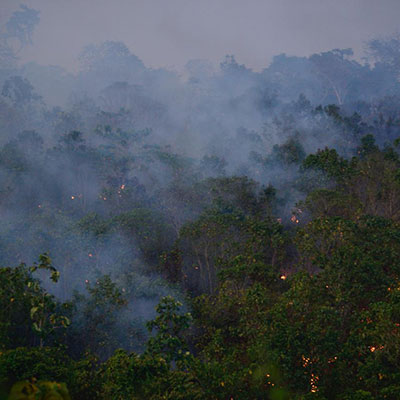
Across Indonesian Borneo, the 2026 El Niño dry season is creating increasingly dangerous conditions for forests, communities and orangutans.
OURF partners in West, Central and East Kalimantan are already responding—fighting active fires, patrolling vulnerable forests, protecting peatlands and working with local communities and government agencies to keep flames away from critical orangutan habitat.
Indonesia has already experienced a significant increase in forest and land fires this year. Approximately 107,000 hectares burned during the first half of 2026, while roughly 116,000 fire hotspots have been detected nationally since January.
For the Orang Utan Republik Foundation, these are not distant statistics. They are affecting landscapes where our partners work every day.
In West Kalimantan, Yayasan Palung and community partners are responding to fires threatening Village Forests in landscapes that provide important habitat for wild orangutans.
These forests are also essential to surrounding communities. When fire enters them, it destroys not only trees, but food sources, nesting sites and forest corridors used by orangutans.
Local patrols and rapid-response teams are critical to detecting fires early and preventing them from spreading deeper into the forest.
In Central Kalimantan, Borneo Nature Foundation is working in some of Borneo's most vulnerable peat-swamp forests.
Peatlands are naturally wet, but when they become drained or degraded, prolonged dry conditions can make the peat itself combustible. Once ignited, peat fires can smolder underground and become extraordinarily difficult to extinguish.
BNF and its local partners work to reduce this risk through forest patrols, firefighting, peatland restoration, canal blocking and other measures that help keep water in the landscape.
CORE Borneo, just east of Palangkaraya, operates the Tuanan Orangutan Research Station in the Blok Khusus Reserve, and protects and studies a population of wild orangutans featured in our Guard-a-Wild Orangutan program. While the area has installed hydrants throughout the study area, fires are within 500 meters from the research station and teams continue to put out fires and hotspots.
This preventive work is one of the most important ways to protect orangutans before fire reaches their habitat.
In East Kalimantan, Centre for Orangutan Protection (COP) is now actively fighting fires around the Labanan Forest in Berau, the same landscape where its BORA orangutan rescue and rehabilitation center is located.
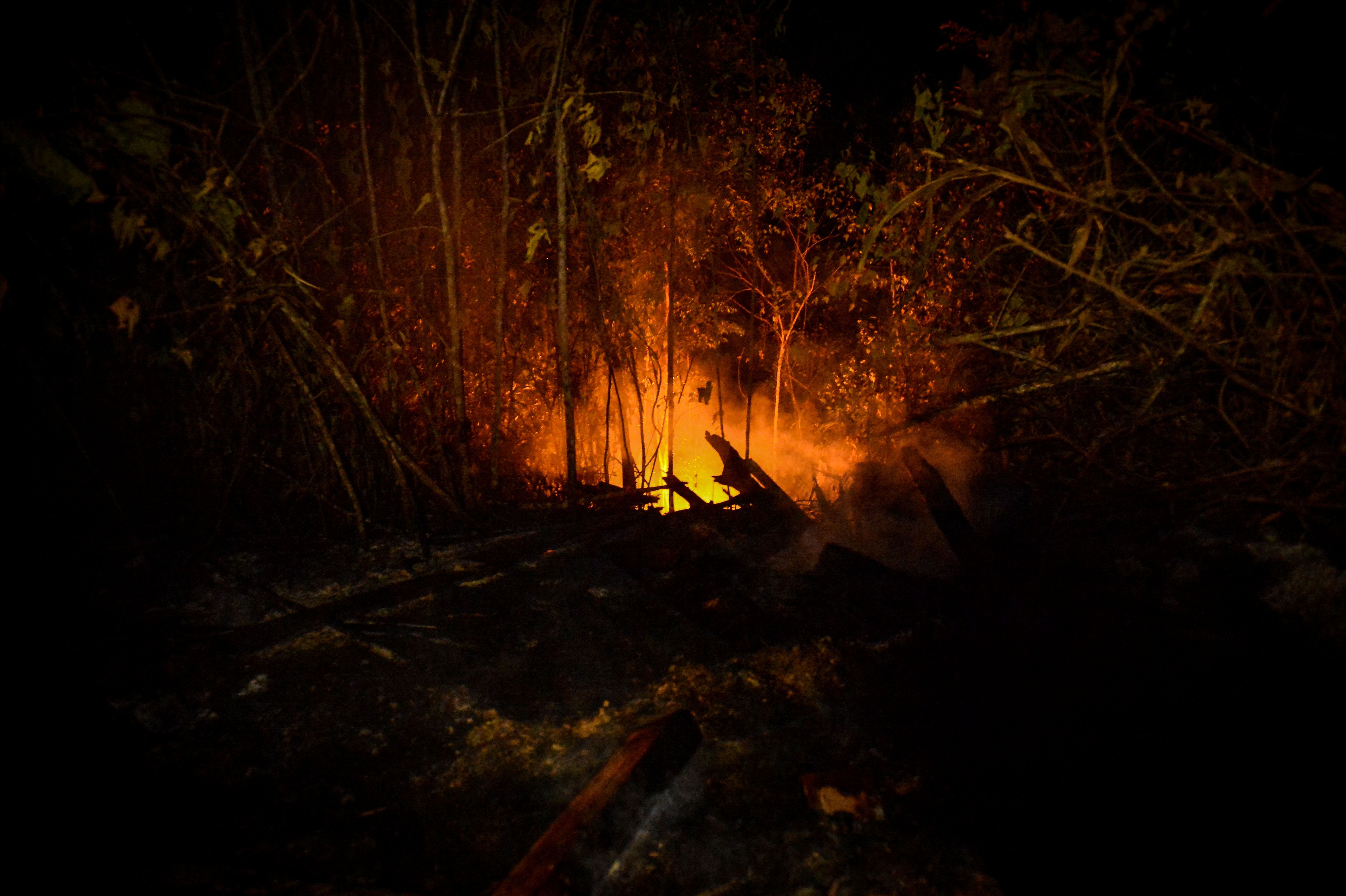
photo courtesy of COP
COP recently reported that its APE Crusader team responded to two fires in a single day.
One fire was near Tumbit Dayak Village, threatening the community along the forest edge. Another was at KM 32, only about 1.3 kilometers from the BORA Labanan Camp.
COP teams are working alongside Manggala Agni, the Ministry of Forestry's fire brigade, the Indonesian Army, the Labanan firefighting unit and local fire-response teams to keep the flames away from communities and critical orangutan habitat.
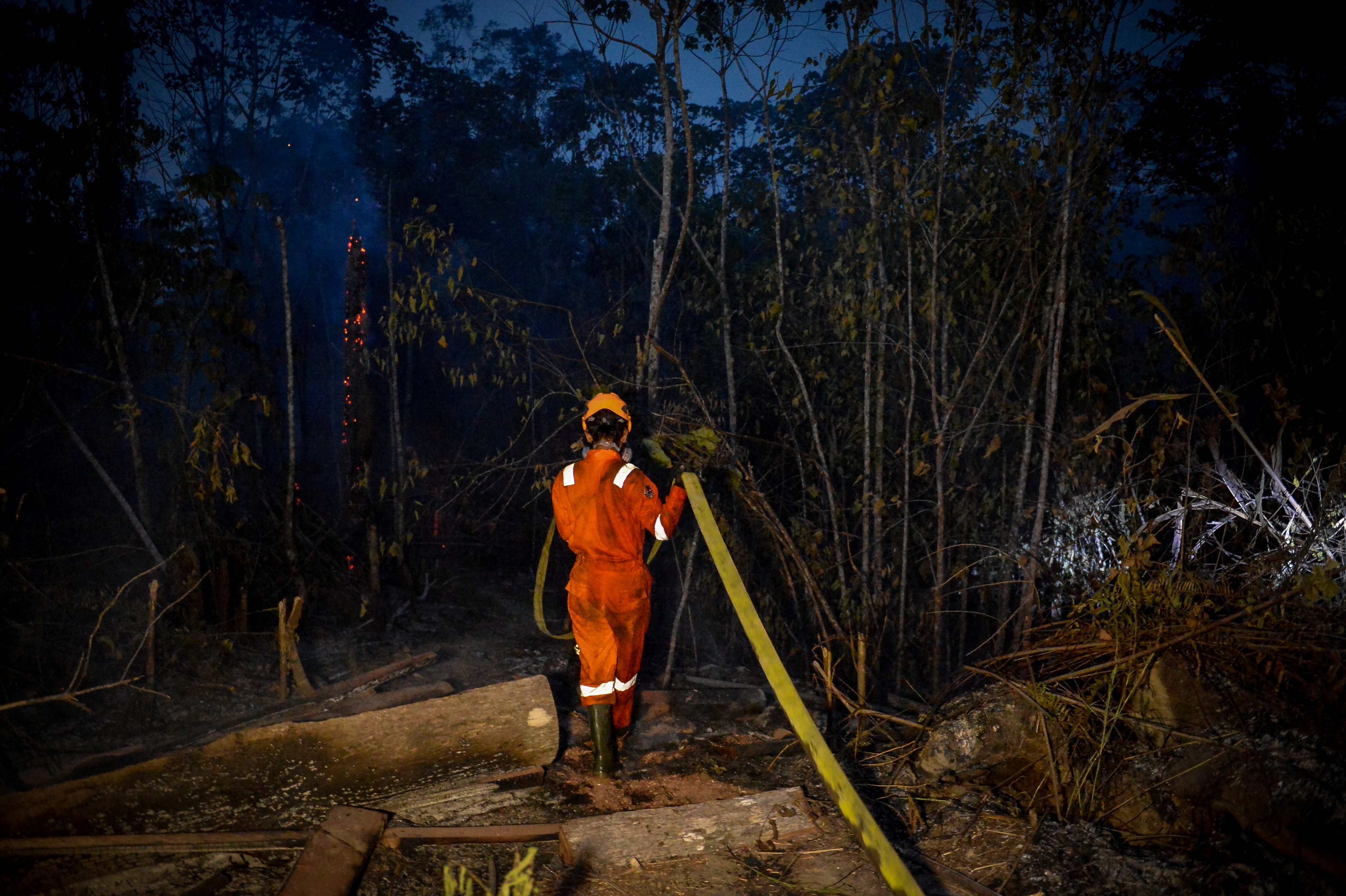
photo courtesy of COP
COP expressed the urgency simply:
“Our orangutans cannot fight a forest fire. We can. And we will.”
An orangutan may survive the flames and still lose the forest it needs to survive.
Fire destroys feeding trees, nesting sites and wildlife corridors. As food disappears, orangutans may be forced toward plantations, farms and villages, increasing the risk of human-orangutan conflict, injury and displacement.
Smoke creates another serious threat, particularly when peatlands burn for extended periods.
The effects can continue long after the fire itself has been extinguished.
Orangutan conservation is often represented by images of rescued animals.
But some of the most effective conservation happens before a rescue is ever necessary.
It is a firefighter stopping a blaze before it reaches the forest.
It is a patrol detecting smoke while a fire is still small.
It is a community protecting the forest surrounding its village.
It is a canal block keeping water inside a peat swamp.
It is a conservation team standing between an advancing fire and critical orangutan habitat.
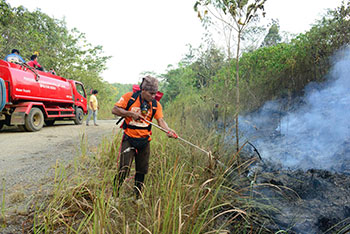
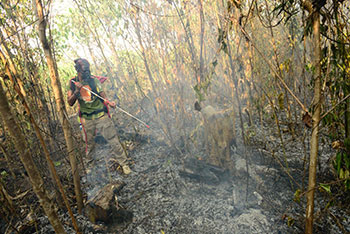
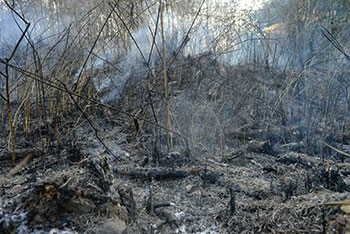
Our partners at Centre for Orangutan Protection have also joined forces with the Ministry of Forestry and the National Disaster Mitigation Body to fight fires in the Labanan Forest, Kalimantan. Donations to this appeal will support their efforts.
This International Orangutan Day, August 19 and throughout the fire season, help OURF stand with the Indonesian organizations and communities protecting orangutans across Kalimantan.
Your donation to the Emergency Fire Appeal will be triple matched until the end of International Orangutan Day and will help OURF support conservation partners responding to fire threats in West, Central and East Kalimantan.