A conversation with the recipients of OURF’s Orangutan Caring Scholarships - by Liam Hughes, Yale University intern with Orang Utan Republik Foundation
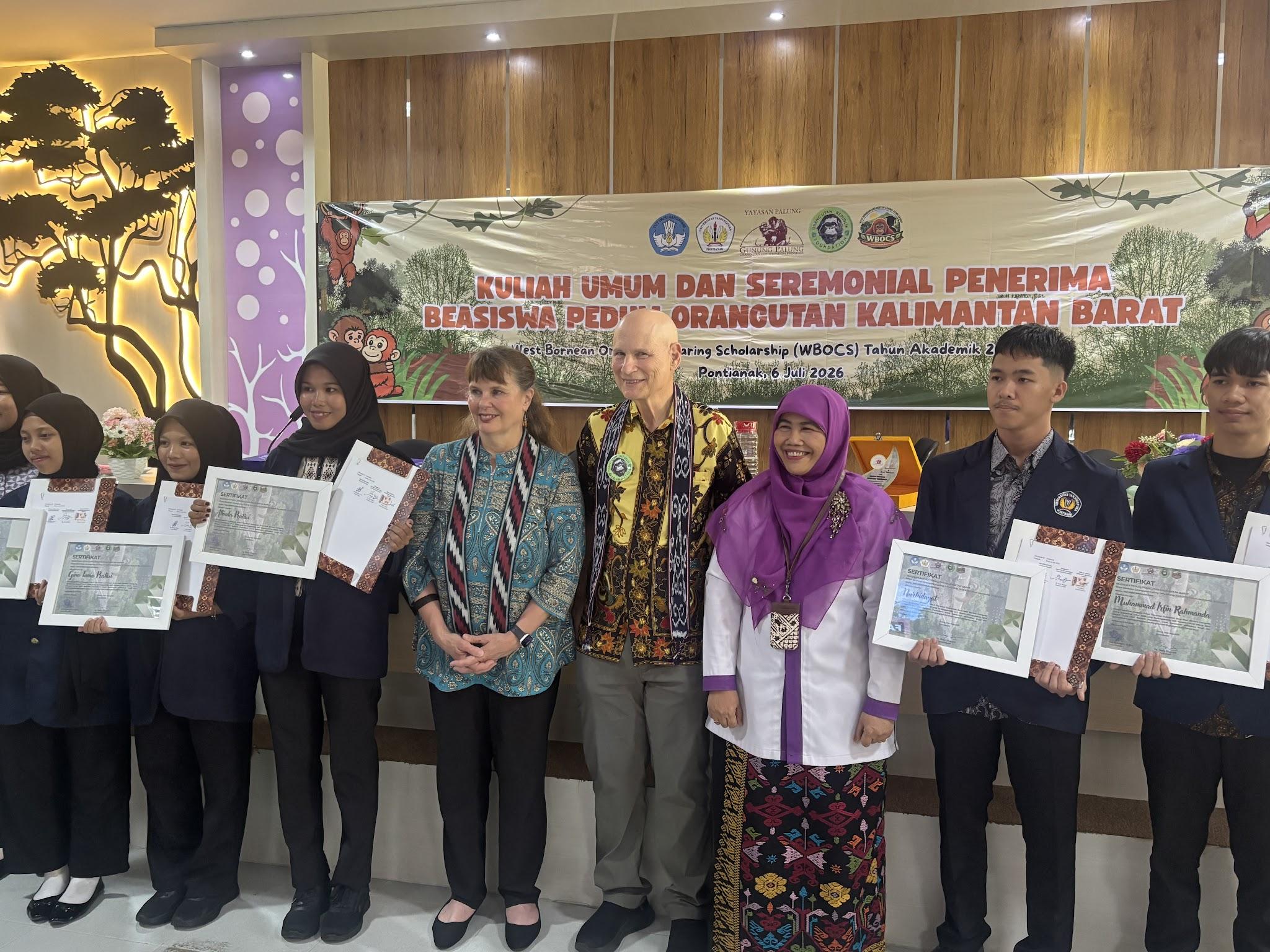
This past week, I had the privilege of attending three of the Orangutan Caring Scholarship (OCS) ceremonies held across Sumatra and Borneo. These scholarships, sponsored by the OURF, are awarded each year to 30 students pursuing degrees in forestry, agriculture, biology, and veterinary studies. Across five different universities within provinces that contain orangutans, six students are awarded the scholarships in recognition of their dedication to conservation. For many of the recipients, these scholarships offer life changing support, making higher education accessible and allowing them to pursue their passions for environmental studies with less of a financial burden. I attended the ceremonies alongside Dr. Gary Shapiro and had the opportunity to witness the remarkable passion and determination these students are bringing to both their studies and the future of their nation’s forests.
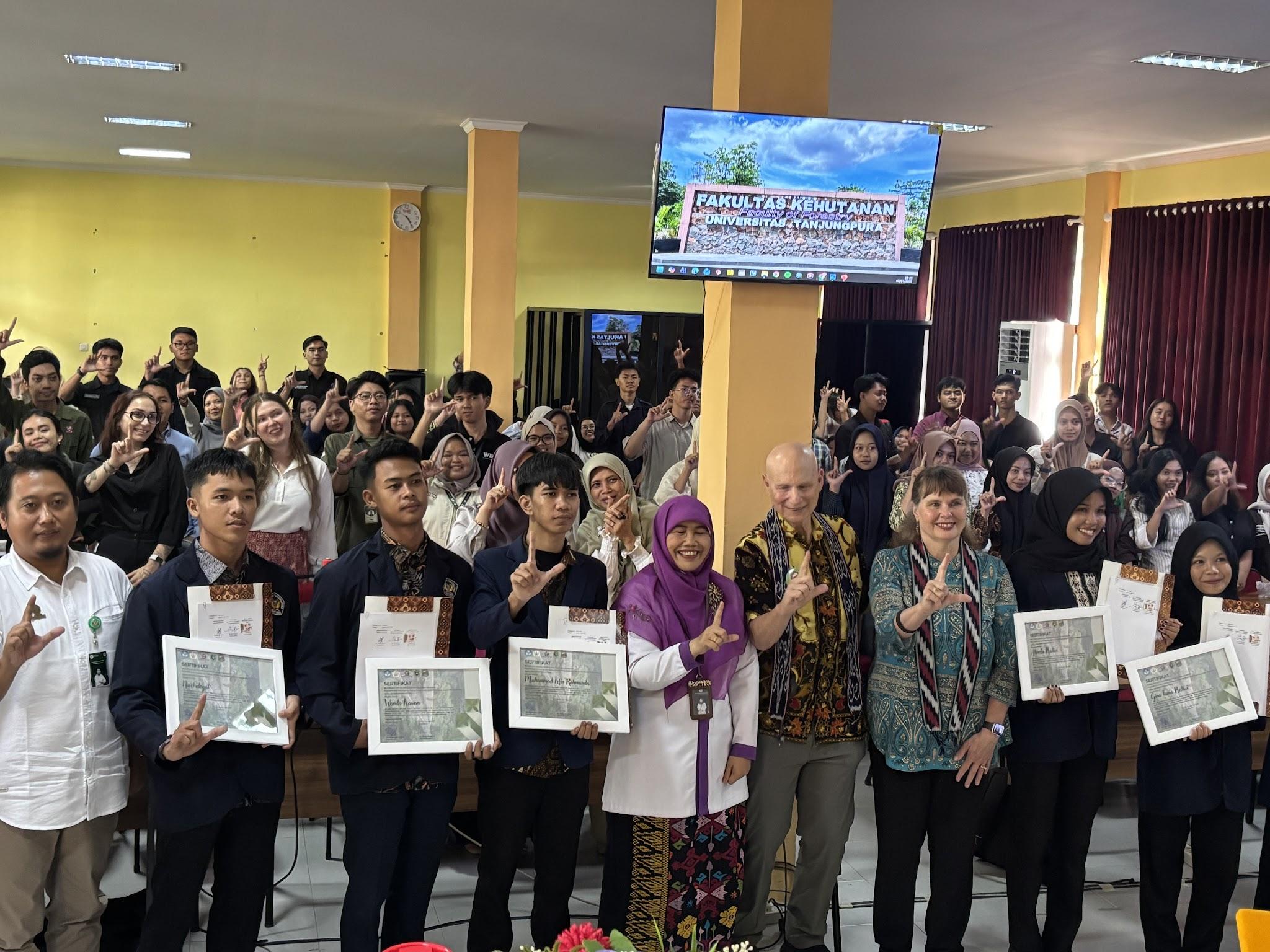
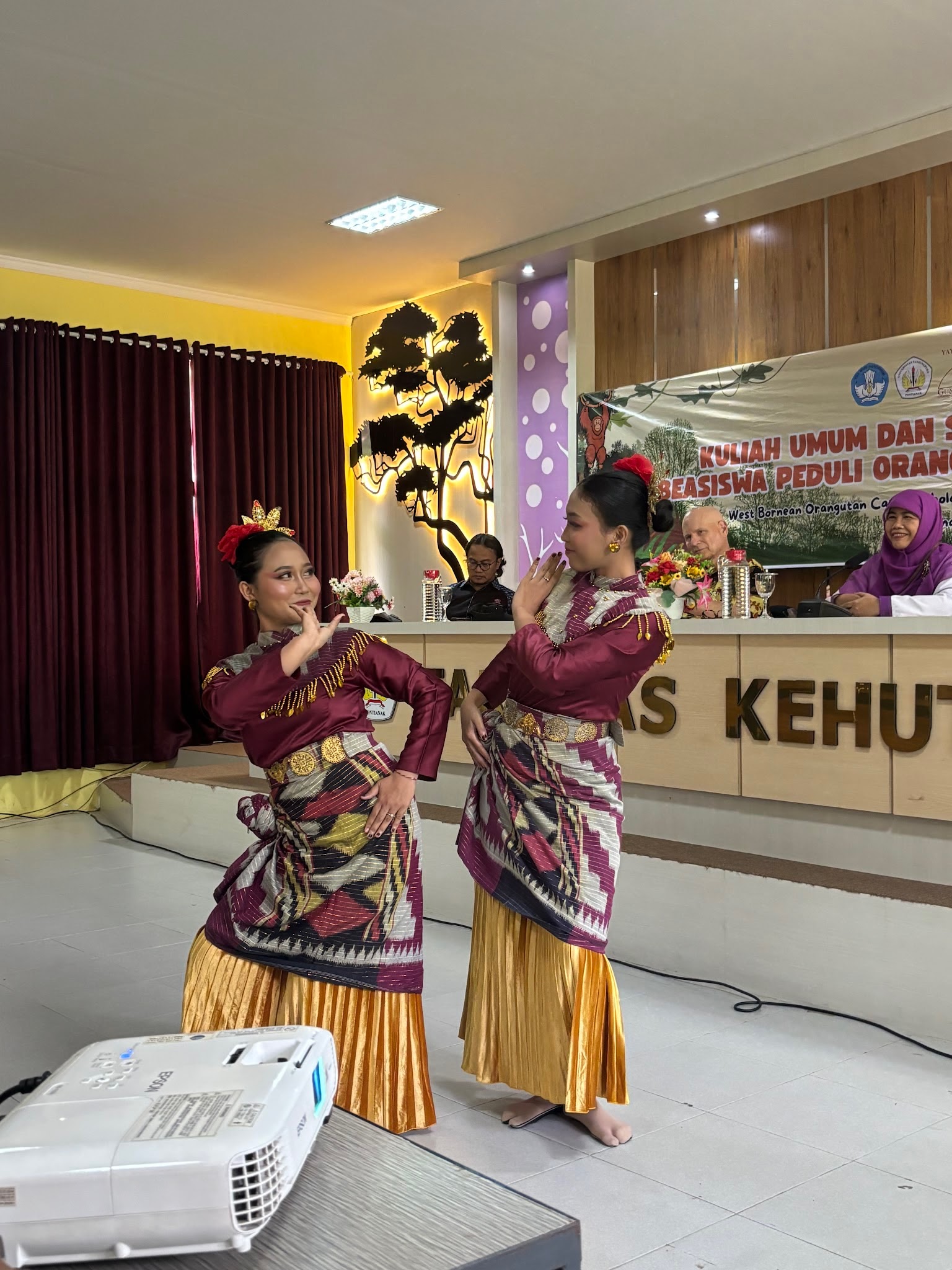
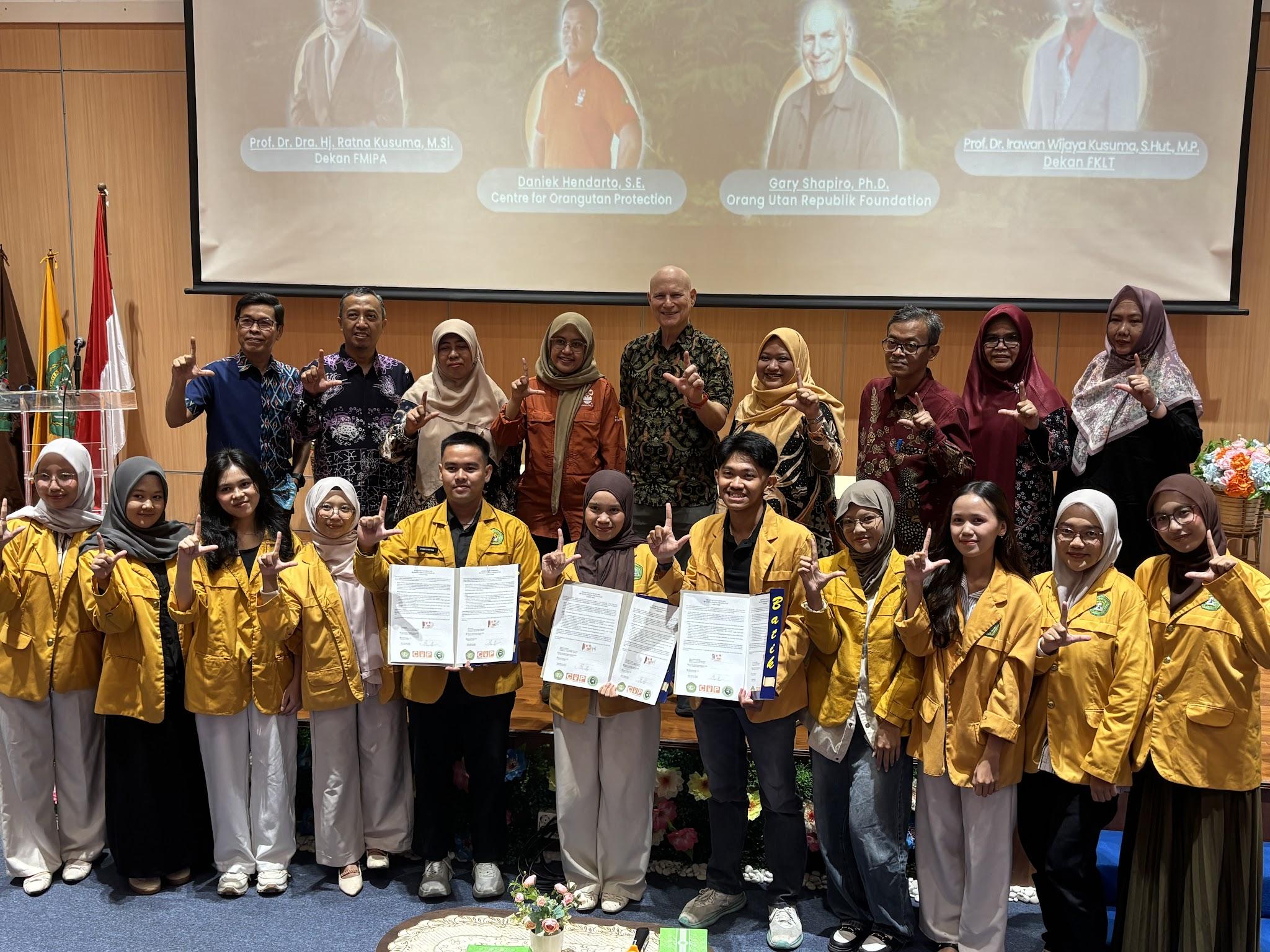
At each ceremony, dozens of students, decked in batik and their blazer uniforms, filled the seats of the lecture halls alongside faculty members, professors, deans and guests from the non-profit organizations supporting the events. Personally, returning to a university lecture hall was not on my bucket list for the summer between my sophomore and junior year, but these gatherings proved to be joyful and moving affairs that I looked forward to attending with each new city we arrived at. They opened with Indonesia’s national anthem followed by the universities’ songs and a traditional dance performance before transitioning to speeches and the presentations of the scholarships. At Tanjungpura University in Pontianak, West Kalimantan, the ceremony also featured lectures from researchers such as Dr. Cheryll Knott from Boston University who spoke on her journey towards being a primatologist. At every ceremony, I found myself, alongside the room full of similarly aged students, following these proceedings with rapt attention.
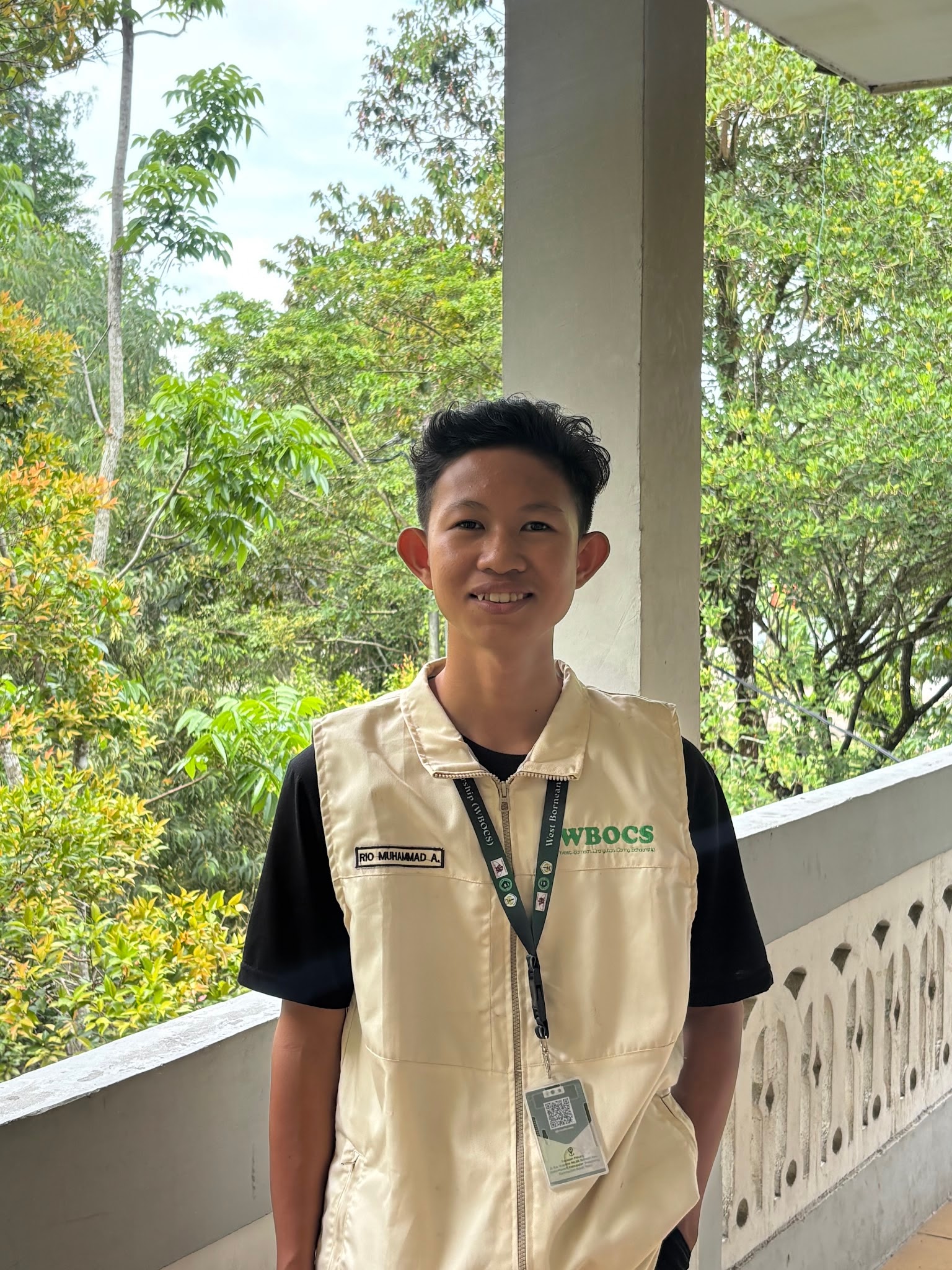
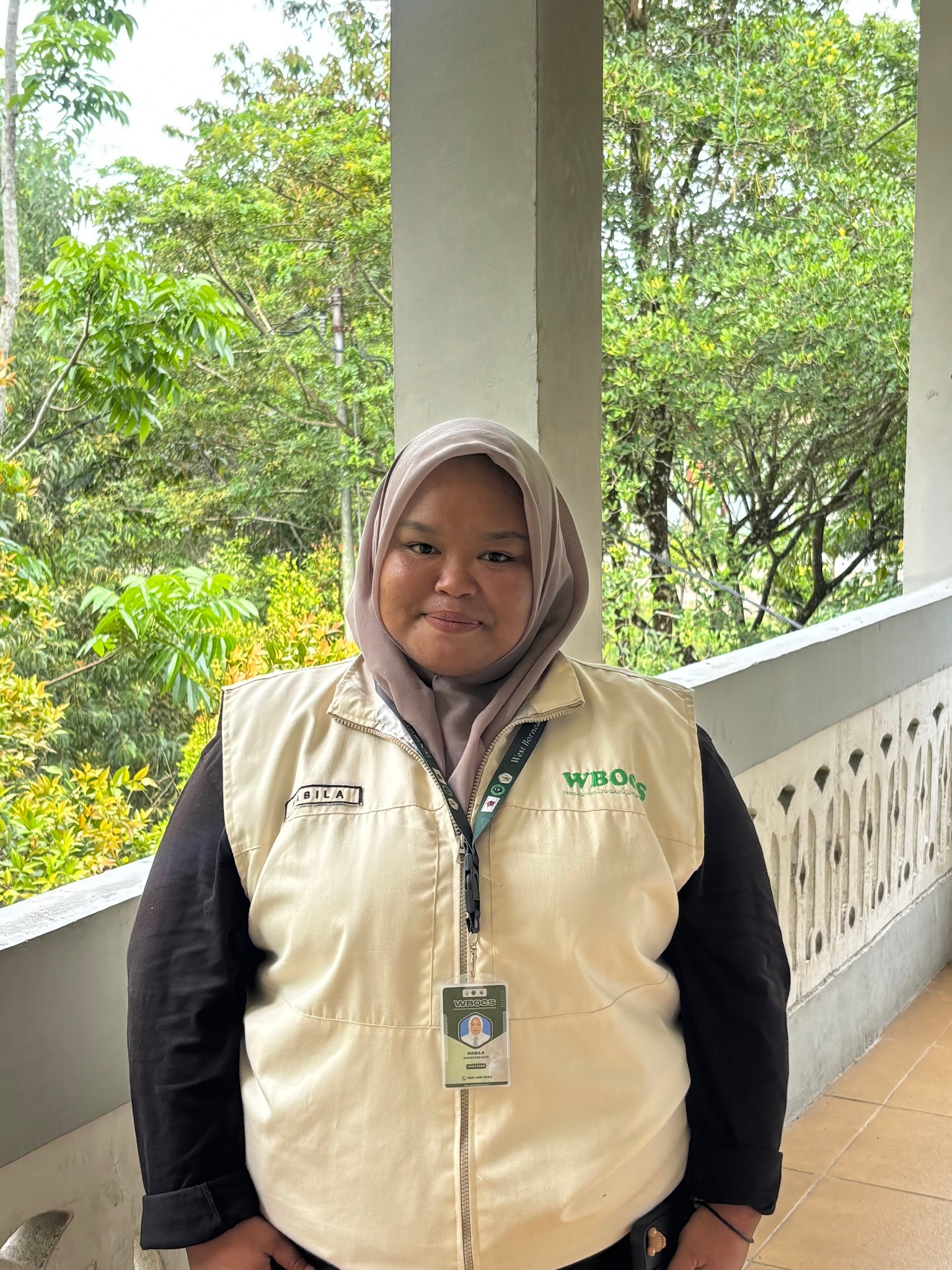
The most inspirational part, however, was experiencing the community that the OCS was able to foster. Students across all four years of university showed up to the ceremonies: past winners, close friends, and other students in the departments attended to offer their support to the recipients. They would film and cheer for the winners and gather for group photos at the end to celebrate their community of young conservationists. I had the opportunity to sit down with two students at Tanjungpura University who had received the OCS the year prior — Nabila, a second year forestry student, and Rio-Muhammad-Alhudda, a second year student of agrotechnology. With the help of a translator, we discussed the scholarship, their hopes and fears for the environment in Indonesia, and what it means to be a young conservationist.
Nabila and Rio are originally from the Kayong Utara regency where one can find Gunung Palung National Park, home to an estimated 2,500 orangutans. Their decisions to pursue paths in conservation were inspired by the environmental degradation in their home region that they witnessed growing up. Rio described incessant land clearing for palm oil plantations and the disastrous forest fires, flooding, and landslides that followed, saying that he has seen “everything being taken away from the local community’s environment and economy.”
“The forests can be used for food and daily necessities,” he said “but they are being cleared for palm oil plantations causing habitat destruction that leads animals like orangutans into residential areas.”
Nabila focused her concerns on waste management, telling me about the piles of garbage she sees accumulating in the river and expressing her worries that current waste management systems in Pontianak are unable to keep pace. Through the OCS program, Nabila was able to take part in a study figuring out how to use aloe vera as a substitute for plastic straws, something she hopes could be valuable for a city like Pontianak which is often called the “land of 1000 coffee shops.”
While the money from the OCS has allowed Nabila and Rio to pursue studies in conservation, the value of the scholarship stretches far beyond being a financial means. Nabila’s work with sustainable resources is just one example of the activities the scholarship students are able to take part in. She explained that through their school’s program they work with conservation experts and get involved in the local community. In fact, a few weeks prior to the ceremony, Rio and Nabila, alongside other OCS recipients, spent several days planting trees and sharing gardening tips with locals.
Beyond sustainable coffee straws and agricultural practices, both students expressed that one thing, above all, is essential for the future of conservation: education. Nabila and Rio believe that awareness is a crucial component in the fight to save the planet. Their hope is to educate others and share their message of environmental concern.
“If we want to make changes,” Nabila said, “we must give voice to the fact that many of our daily practices and systems are damaging to the ecosystem.”
With the help of the OCS, students like Nabila and Rio are receiving an education that prepares them to lead the charge for the future of Indonesia’s conservation movement. Rio believes that the program is creating a new generation of environmental advocates. “[The OCS] continues to produce young people who not only are highly capable but have the awareness and drive for conservation and environmental protection,” he said.
Despite the environmental destruction around them, both Nabila and Rio have remained optimistic in their fight to save the planet. “Our hope is high,” Rio told me. “We want other young people to follow us in this conservation field, because nature cannot be protected alone.”
Nabila added to that sentiment, expressing her hope that the nation’s decision-makers will recognize the efforts of young people to make change: “we hope that the government will see us carrying out our conservation activities, and that they will hear all of our voices.”
Rio stressed that to accomplish these goals, they need all hands on deck: “we want to be embraced by the community because we can’t do it alone. We need support from the local community, especially from the government, and also from the international community, because protecting nature and protecting the earth is not only a task for young people, but for everyone on this planet.”
At the end of our conversation, we discussed their connection to orangutans and the role of the species within their studies. Rio explained that orangutans, as an umbrella species, play a critical part in maintaining the ecosystem. He told me: “I want to save the orangutans because if we protect them, the forest will also be protected because they are so interconnected. As long as the orangutans are around, that means all the ecosystems below them can be maintained, from trees to other animals to the soil, water, and the sun that shines on this place.”
Nabila and Rio were just two of countless students that I had the pleasure of meeting these past few weeks and their sentiments were echoed across conversations I had with other OCS recipients. As someone with persistent climate anxiety, meeting fellow young people who are at the forefront of their nation’s environmental movement has made it easy to feel hopeful about the future of conservation. In my brief time here, I have seen swaths of palm oil plantations stretching along road lines, fleets of coal-bearing ships, and rivers of waste. I have seen orangutans relegated to monitored release islands and heard stories of the never-ending assault on nature in the name of corruption and money. But I have also heard the voices of people like Nabila and Rio. I have experienced the joy, care, and excitement of students like them who are committed to making actionable change. I have been surrounded by a community of forward-facing youth who, through the Orangutan Caring Scholarship, have been given the opportunity to pursue higher education and develop the skills needed to create a greener future for themselves and others.
Pictured: Rio and Nabila, ceremony at Tanjungpura, opening dance, ceremony in Pontianak