
Across Indonesian Borneo, the 2026 dry season is becoming an increasingly serious test for orangutan conservation.
From West Kalimantan to Central and East Kalimantan, partners of the Orang Utan Republik Foundation (OURF) are confronting different stages of the same emerging crisis: forests drying under El Niño conditions, peatlands becoming increasingly vulnerable to fire, and—in two partner landscapes—firefighters already battling flames near important orangutan habitat.
The national picture provides a sobering backdrop.
According to Indonesia’s Forestry Ministry data reported by The Jakarta Post, approximately 107,000 hectares of forest and other land burned across Indonesia during the first half of 2026. That was 120 percent more than during the same period in 2019, one of Indonesia’s most severe recent fire years. Independent monitoring by Nusantara Atlas had identified approximately 116,000 fire hot spots since January, around 6,000 more than during the corresponding period in 2019.
By August, Indonesia’s fire emergency was continuing to grow, with national authorities reporting more than 107,000 hectares burned and strengthening El Niño conditions increasing the danger as the country moved deeper into the dry season.
For OURF, these numbers are not distant national statistics. They are increasingly visible in the forests and communities where our Indonesian partners work to protect orangutans.
West Kalimantan: Fire enters the forests protected by Yayasan Palung
In West Kalimantan, OURF partner Yayasan Palung and its conservation network are already confronting active fires.
Recent field reports from the Sungai Paduan landscape show that fires have entered three of the four Village Forests protecting orangutan habitat.
These community-managed forests are important not only for orangutans but also for the people who depend upon surrounding forest landscapes for water, forest products, livelihoods and environmental security.
When fire moves into these forests, the consequences extend far beyond the trees immediately burned.
Fire can eliminate fruiting trees and nesting sites, fragment habitat and force orangutans into smaller areas with fewer food resources. Animals that survive the flames may eventually travel outside the forest in search of food, increasing the possibility of encounters with farms, plantations and human settlements.
Those encounters can become another conservation emergency.
Yayasan Palung’s response illustrates why locally rooted conservation organizations are so important during an El Niño year. Community relationships, forest patrols and local firefighting capacity can mean the difference between a small fire being contained and a much larger section of orangutan habitat being lost.
Central Kalimantan: Borneo Nature Foundation prepares for the peat-fire threat
In Central Kalimantan, Borneo Nature Foundation (BNF) is confronting a particularly dangerous form of fire risk.
Much of BNF’s work is centered on the peat-swamp forests of the Sebangau landscape.
Healthy peat-swamp forest is naturally saturated with water. But when peatlands are degraded or drained by canals, their water tables fall. During an extended dry season, the accumulated organic material beneath the forest can become combustible.
Once peat begins burning, fire may smolder underground and become extremely difficult to extinguish.
BNF is now explicitly warning that the 2026 El Niño could produce even more severe fires in Borneo and has launched an emergency appeal supporting firefighting, prevention and habitat restoration.
The stakes are enormous.
Sebangau National Park contains one of the world’s most important remaining Bornean orangutan populations. BNF notes that during the catastrophic 2015 fire season, roughly 10 percent of Sebangau’s forest was lost, affecting habitat, food availability and orangutan movement. Research following those fires also found behavioral changes consistent with significant energetic and physiological stress among orangutans exposed to fire and smoke.
BNF’s response therefore begins long before firefighters see flames.
Its conservation approach has included blocking old drainage canals so peatlands retain water, restoring damaged forests and supporting community-based firefighting teams. Keeping peat wet greatly reduces its vulnerability to fire.
This is one of the least visible but most important forms of orangutan conservation.
Sometimes the best way to fight a forest fire is to keep the forest from becoming dry enough to burn.
East Kalimantan: COP is fighting fires near the BORA orangutan center
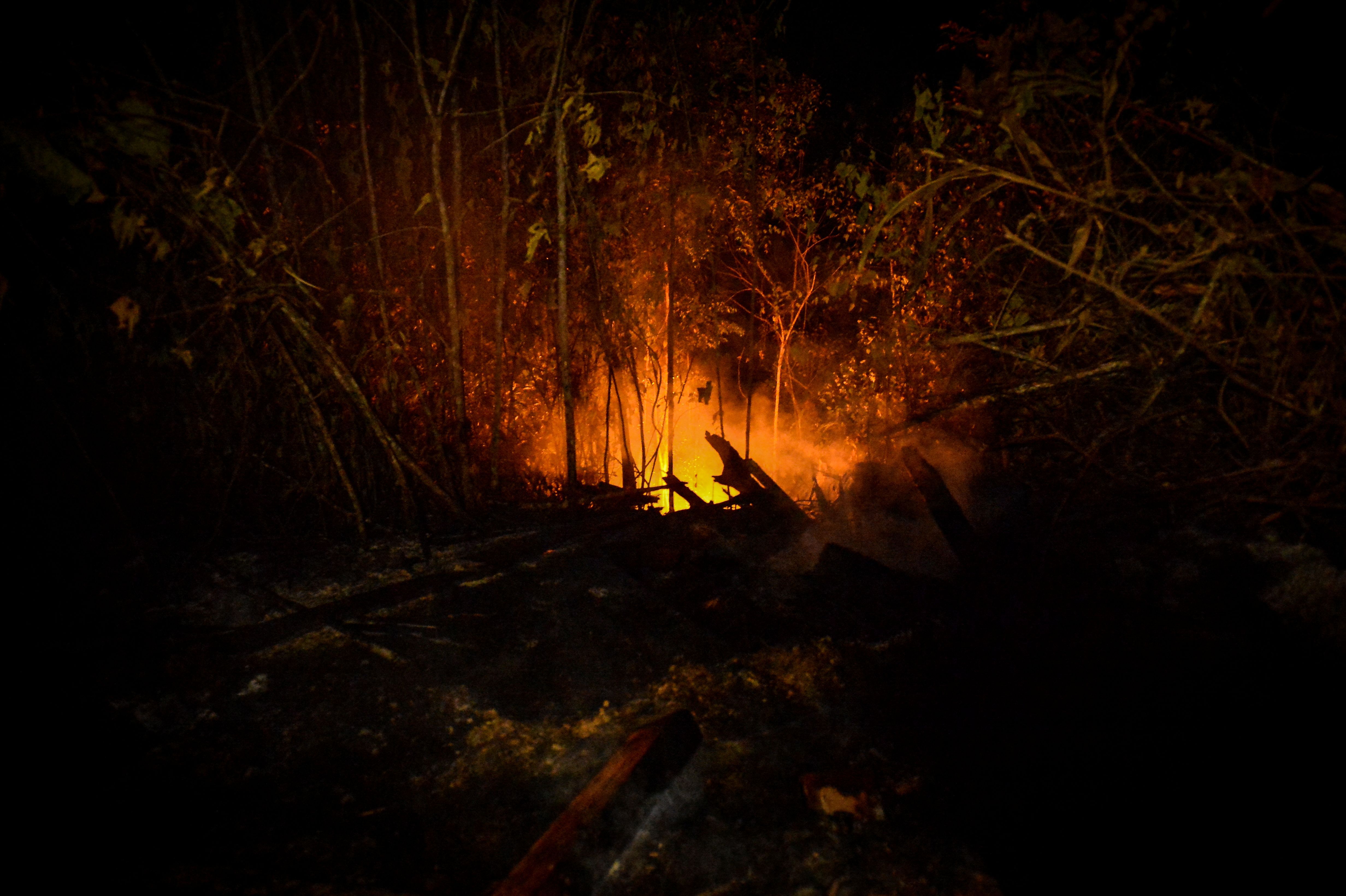
photo courtesy of COP
In East Kalimantan, the threat has now become immediate.
OURF partner Centre for Orangutan Protection (COP) reports that its APE Crusader team is currently fighting fires around the Labanan Forest in Berau, the same landscape where COP’s BORA orangutan rescue and rehabilitation center is located.
According to COP, its team tackled two fires in a single day.
One was near Tumbit Dayak Village, threatening a community along the forest edge.
The second was at KM 32—only about 1.3 kilometers from the BORA Labanan Camp.
COP personnel are working alongside Manggala Agni, the Ministry of Forestry’s fire brigade, the Indonesian Army, the Labanan firefighting unit and local fire-response teams in an effort to contain the flames and keep them away from homes and critical orangutan habitat.
The proximity of the fire to BORA makes the East Kalimantan situation particularly striking.
BORA is a place where rescued and displaced orangutans spend months—and sometimes years—learning or relearning skills needed for life in the forest. Protecting those animals ultimately depends upon something much larger than the rehabilitation center itself.
They need forest.
COP expressed the situation with stark simplicity in its fire report:
“Our orangutans cannot fight a forest fire. We can. And we will.”
The statement captures something fundamental about conservation during an extreme dry season.
Rescuing an orangutan after its forest disappears is necessary work.
Keeping that forest from disappearing is better.
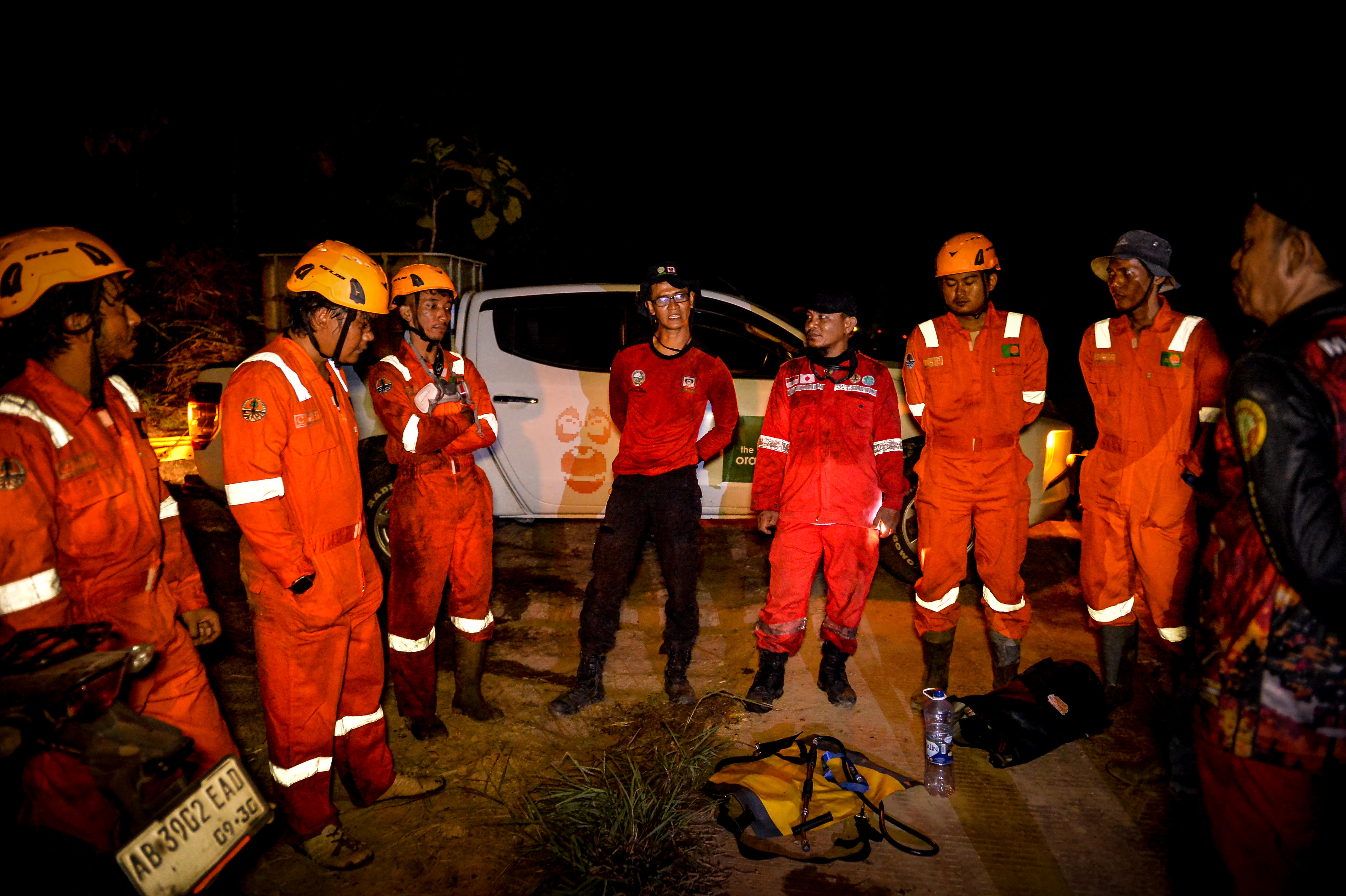
photo courtesy of COP
Fire threatens orangutans long after the flames are gone
The immediate image of a forest fire is dramatic: flames moving through vegetation as firefighters struggle to stop them.
For orangutans, however, the consequences can continue long after the fire is extinguished.
Orangutans depend upon large, complex forest landscapes. Individual animals travel through extensive home ranges in search of seasonal foods. Females need secure habitat in which to raise offspring that remain dependent upon their mothers for many years.
Fire can remove fruiting trees, nesting sites and forest corridors.
The surviving forest may no longer contain enough food to sustain the animals that remain.
That can begin a dangerous chain:
drought → fire → habitat loss → food scarcity → displacement → human-orangutan conflict.
An orangutan driven from a burned forest may enter agricultural land simply because there is nowhere else to feed.
What humans perceive as a wildlife conflict may therefore begin as a habitat crisis.
Smoke creates another danger
The flames themselves are only part of the problem.
Peat fires produce thick smoke containing fine particles and toxic gases that can spread across enormous areas.
Research associated with BNF’s Central Kalimantan work following the 2015 fires found significant behavioral and physiological effects among orangutans exposed to prolonged smoke. Orangutans rested more and traveled less, while biological indicators suggested that their bodies were still expending substantial energy. Changes were also recorded in their vocalizations.
Humans living beside these forests breathe the same air.
Firefighters, conservation workers, villagers, children and wildlife therefore become part of the same environmental emergency.
The warning from 2019
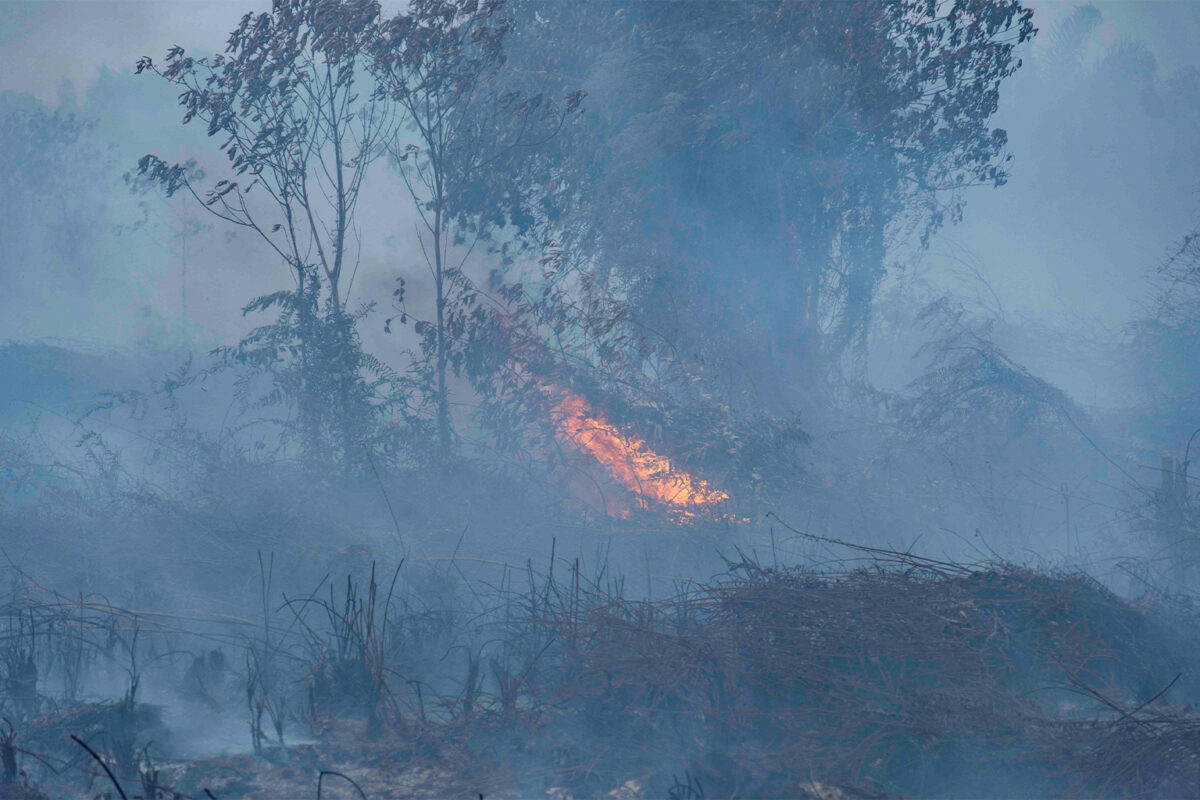
The comparison with 2019 deserves attention.
During the first half of 2026, Indonesia had already recorded 120 percent more burned land than during the equivalent period of 2019, while Nusantara Atlas had detected about 6,000 more hot spots than during the comparable 2019 period.
Those numbers do not mean that 2026 will inevitably repeat the severity of previous catastrophic fire years.
Rainfall, winds, human behavior, land management and the effectiveness of early intervention will all influence what happens during the coming months.
But they do mean that there is little room for complacency.
Three regions, three partners, one growing challenge
The experiences of OURF’s partners illustrate how orangutan conservation during an El Niño year operates on several fronts simultaneously.
In West Kalimantan, Yayasan Palung and community partners are already fighting fires that have entered Village Forests protecting orangutans.
In Central Kalimantan, Borneo Nature Foundation is mobilizing against the danger posed by peat fires—combining emergency firefighting capacity with the longer-term work of rewetting peatlands, restoring forests and strengthening community fire-response systems.
And in East Kalimantan, Centre for Orangutan Protection is now battling fires around Labanan Forest, including one reported only about 1.3 kilometers from its BORA orangutan rehabilitation center.
Taken together, these reports show that the 2026 El Niño fire threat is no longer merely something conservationists are forecasting.
For some of OURF’s partners, the emergency has already begun.
El Niño does not light the match
It is important, however, not to oversimplify the cause.
El Niño does not start forest fires.
It creates hotter and drier conditions that can make forests and particularly degraded peatlands far more susceptible to burning.
Human activities—including land clearing, agricultural burning, accidental ignition and peatland drainage—often provide the source of ignition or amplify the severity of a fire.
That distinction matters because it means that much of the eventual damage can still be prevented.
Keeping peatlands wet is prevention.
Supporting community forest management is prevention.
Patrolling forests during periods of extreme fire risk is prevention.
Providing local firefighters with pumps, hoses, protective equipment and transportation is prevention.
Restoring degraded forests is prevention.
And supporting organizations already embedded in these landscapes gives them the ability to intervene before a small fire becomes an ecological disaster.
Protecting orangutans before they need rescuing
Orangutan conservation is often represented by unforgettable images of rescued infants or animals returning to the forest.
But some of the most consequential conservation work during the coming months may produce no such photograph.
It may be a community firefighter watching smoke along a forest boundary.
A patrol discovering a fire while it is still small.
A team carrying pumps deep into the forest.
A canal block holding water inside a peat swamp.
A villager deciding that the forest beside a community is worth defending.
Or an APE Crusader standing between an advancing fire and the forest surrounding an orangutan rehabilitation center.
If those efforts succeed, there may be no orangutan rescue to photograph.
And that is precisely the point.
As Indonesia moves deeper into the 2026 dry season, OURF will continue following the situation confronting our partners across Kalimantan and the forests, communities and orangutans they are working to protect.
More than 107,000 hectares had already burned nationally by midyear. Fire hot spots are running above comparable 2019 levels. Active fires are now being fought in orangutan landscapes associated with OURF partners in both West and East Kalimantan, while BNF is warning of the extraordinary danger posed by peat fires in Central Kalimantan.
El Niño will help determine how dry the months ahead become.
What people do now may help determine how much orangutan forest is still standing when the rains finally return.